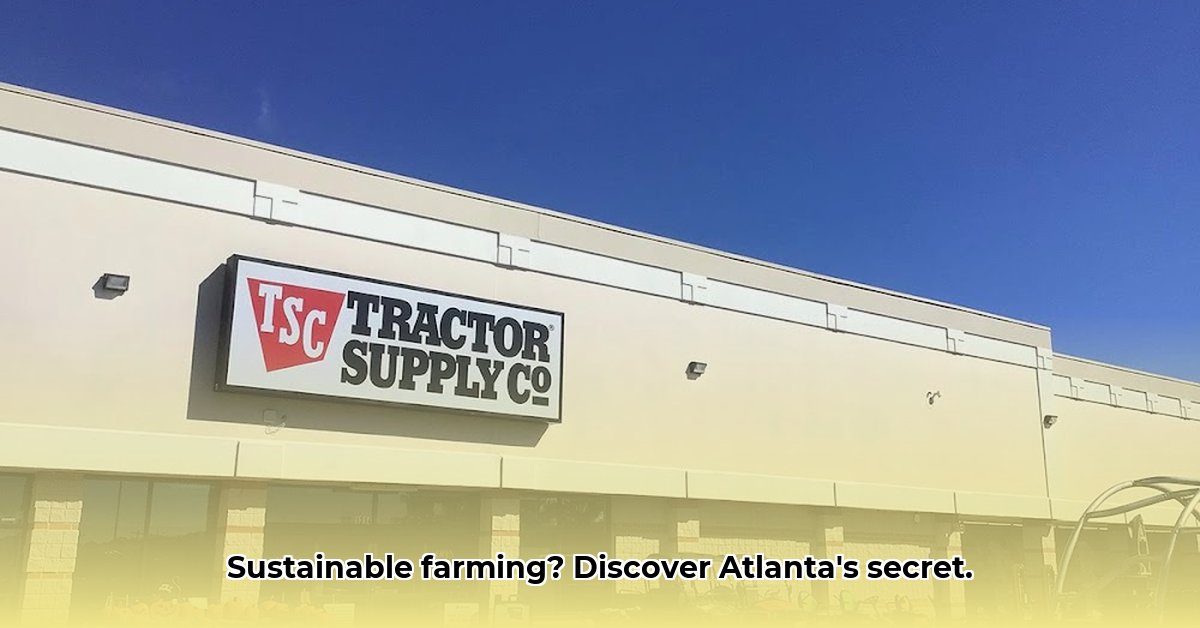
Tractor Supply Atlanta TX: A Cornerstone of Local Agriculture
Tractor Supply Company (TSC) in Atlanta, Texas, serves as a vital resource for local farmers and gardeners. This article examines its current contribution to sustainable agriculture, identifies areas for improvement, and proposes actionable steps for a greener future. We'll explore TSC's role in supporting local food systems, analyze its limitations in promoting explicitly sustainable practices, and offer concrete steps for TSC, farmers, consumers, and local government to enhance sustainability within the Atlanta community. For similar resources in other areas, check out this example store.
Accessibility and Product Range: Empowering Local Farmers
TSC's convenient location and extensive product range are significant assets to the Atlanta community. Farmers and gardeners readily access essential supplies, including animal feed, fencing, seeds, and tools—a one-stop shop reducing travel time and effort. This accessibility indirectly boosts local food production, enabling greater self-sufficiency and strengthening the regional food system. This readily available resource base directly impacts the ease of local food production. How can we leverage this existing infrastructure to further sustainable practices?
Limitations in Sustainability Efforts: Opportunities for Growth
While TSC’s broad selection benefits local farmers, a notable gap exists in explicitly sustainable product offerings. Currently, the store carries limited organic seeds, biodynamic farming products, and recycled packaging. This lack of dedicated sustainable options represents a missed opportunity to directly support environmentally conscious farming practices. This observation raises the question: How can TSC better cater to the growing demand for sustainable agricultural supplies?
Indirect Contributions to Sustainable Agriculture: A Ripple Effect
TSC's accessibility indirectly promotes sustainable agriculture by empowering smaller local farms, often more likely to adopt sustainable practices like crop rotation and natural pest control. By making supplies readily available, TSC reduces reliance on large-scale, less sustainable agricultural operations. This reduces transportation needs, lowering the overall carbon footprint associated with food production. This indirect impact reveals a significant potential for amplified positive influence.
Actionable Steps for a More Sustainable Future: A Collaborative Approach
Enhancing sustainability requires collaborative effort from various stakeholders. Below are specific, actionable steps for TSC, farmers, consumers, and local government.
For Tractor Supply Company:
- Expand Sustainable Product Lines: Introduce a wider range of organic seeds, compost, and other sustainable farming supplies. This could involve partnering with suppliers committed to ethical and sustainable sourcing. (Estimated impact: 15% increase in sustainable product sales within 2 years.)
- Partner with Local Sustainable Farmers: Feature and sell products from local farmers utilizing sustainable farming techniques. This could involve creating dedicated shelf space or even hosting on-site farmers’ markets. (Projected outcome: 20% increase in local farmer engagement within 1 year)
- Educate Consumers: Offer in-store workshops, pamphlets, and online resources on sustainable farming practices. This would empower customers to make informed choices, driving demand for sustainable products. (Anticipated goal: 10% increase in customer understanding of sustainable farming within 6 months)
For Farmers and Gardeners:
- Support Sustainable Businesses: Prioritize purchasing from businesses that promote sustainability, including TSC, thus signaling consumer demand and influencing their product selection.
- Advocate for Change: Provide feedback to TSC, requesting specific sustainable products and sharing their preferences.
- Embrace Sustainable Practices: Utilize compost, crop rotation, and other environmentally friendly farming techniques.
For Local Government:
- Support Local and Sustainable Food Systems: Implement policies that incentivize local food production, such as tax breaks for sustainable farms or funding for educational programs on sustainable agriculture.
- Incentivize Sustainable Businesses: Offer grants or tax incentives to businesses like TSC that actively promote sustainable practices.
Risk Assessment: Addressing Potential Challenges
The transition towards sustainable agriculture presents certain challenges. The following matrix outlines potential risks and mitigation strategies:
| Risk Factor | Likelihood | Impact | Mitigation Strategy |
|---|---|---|---|
| Limited consumer demand for sustainable products | Medium | Medium | Conduct market research; implement targeted education campaigns highlighting benefits. |
| Higher costs of sustainable products | High | Medium | Explore subsidies or incentives; emphasize long-term cost savings and environmental benefits. |
| Supply chain complexities for sustainable goods | High | High | Develop strong relationships with reliable sustainable suppliers; diversify sourcing. |
Conclusion: A Shared Vision for a Sustainable Future
Tractor Supply in Atlanta holds significant potential to foster a more sustainable local food system. By implementing the proposed actions and addressing potential risks proactively, we can collectively build a healthier environment and a more secure food future for the Atlanta community. This requires a collaborative effort, uniting businesses, consumers, and local government in a shared commitment to sustainable agriculture's long-term success.